
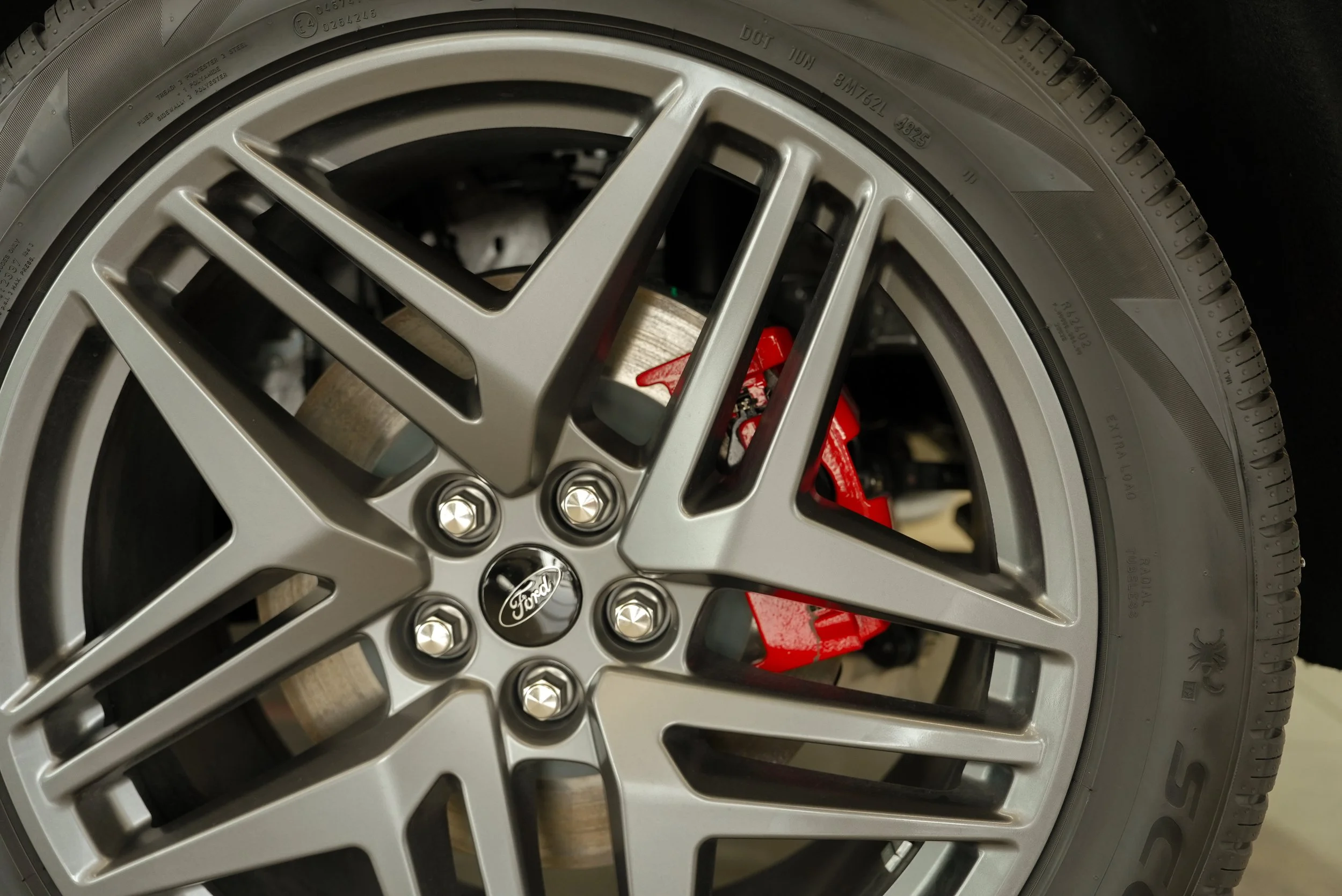
Track-Specific Brake Inspection & Replacement
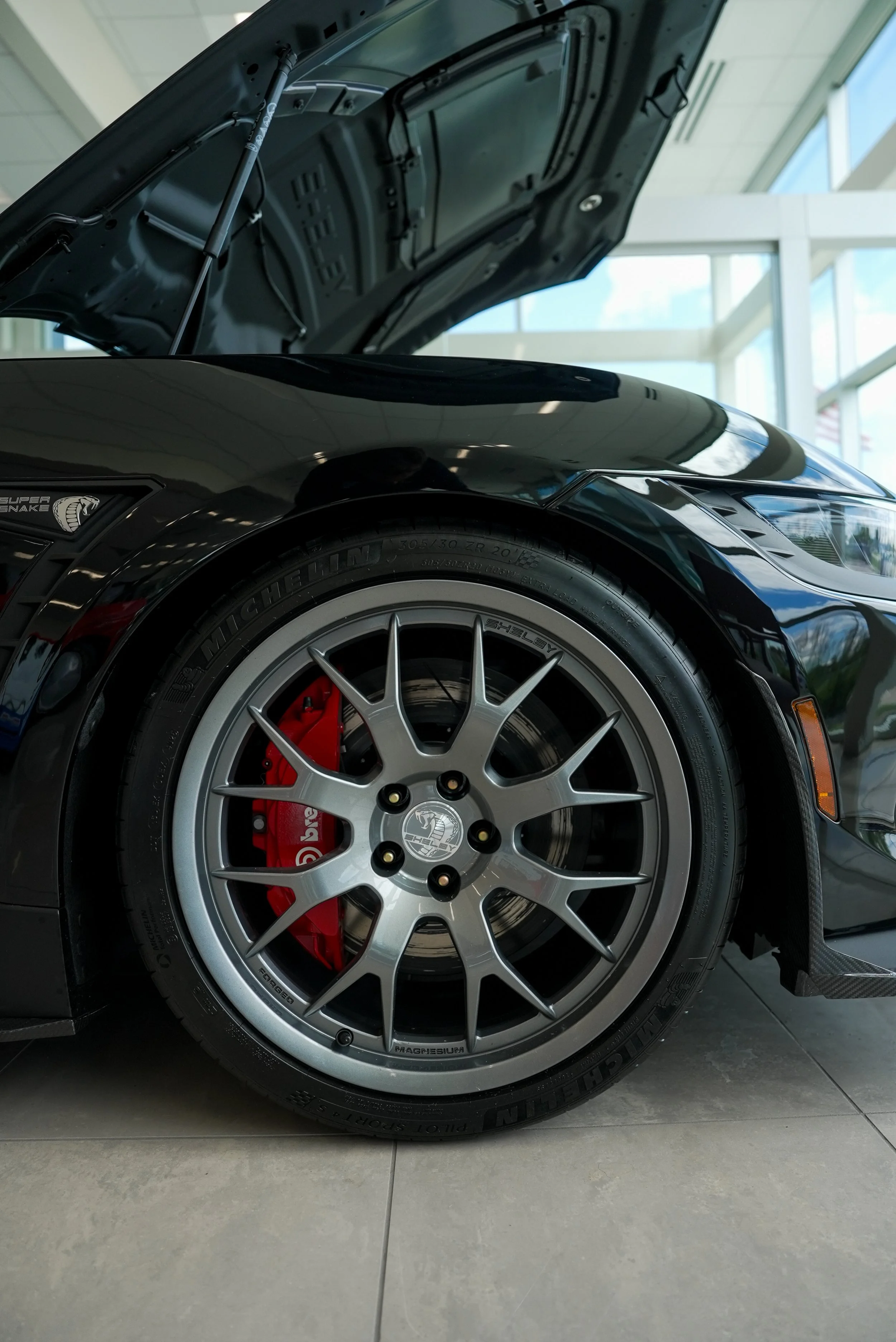
What It Does:
A track-specific brake inspection evaluates the braking system around the temperatures, speeds, and repeated high-energy stops encountered during performance driving. Components that have plenty of service life remaining for everyday street use may be approaching their limits once subjected to sustained track conditions.
On track, every braking event converts the vehicle’s kinetic energy into heat. Pads, rotors, calipers, fluid, hoses, and surrounding components must absorb and manage that energy repeatedly, often with limited time to cool between braking zones. A system that performs flawlessly during normal driving can experience fade, accelerated wear, or fluid-related issues after only a few demanding laps.
A proper track inspection evaluates pad thickness and compound, rotor condition and thickness, brake fluid condition and boiling point, caliper operation, brake lines and hoses, hardware, wheel bearings, and evidence of abnormal heat or wear.
From there, replacement decisions are based on whether the braking system has sufficient capacity and service life for the demands ahead, not just whether the components are currently usable on the street.
Track braking is fundamentally a heat-management problem.
Every time you brake from speed, the vehicle's kinetic energy has to go somewhere. The braking system converts much of that energy into thermal energy through friction between the pads and rotors. The faster and heavier the vehicle, and the harder and more frequently it is driven, the greater the amount of heat the brakes must absorb and dissipate.
That changes how the entire braking system needs to be evaluated.
Brake Fade Resistance: As temperatures exceed the operating range of a brake pad, its coefficient of friction can decrease. The pedal may still feel firm, but the vehicle requires more pedal effort and distance to slow down. The correct pad compound needs an operating temperature range appropriate for the intended use.
Brake Fluid Boiling Point: Brake fluid absorbs moisture over time. Moisture lowers its boiling point, and track temperatures can expose that weakness quickly. When fluid boils, vapor enters a system designed to operate hydraulically with incompressible fluid, potentially creating a soft or sinking pedal.
Rotor Thermal Capacity: Rotors act as both friction surfaces and heat sinks. Thickness, condition, metallurgy, ventilation, and existing heat cycles all influence how effectively they can absorb and release energy.
Pad Material Remaining: A pad that has sufficient material for thousands of miles of street driving may not have enough thermal mass for a track session. As pad thickness decreases, less material exists to insulate the caliper and brake fluid from rotor temperatures.
Vehicle Weight And Power: A heavier vehicle requires the brakes to dissipate more energy during deceleration. Additional horsepower also allows the vehicle to repeatedly reach higher speeds between braking zones, increasing the amount of energy the brakes must manage on the next stop.
Tire Grip Matters: Performance tires can generate substantially more braking force than ordinary street tires. More available grip allows the braking system to work harder, which can increase pad, rotor, and fluid temperatures.
Repeatability Matters More Than One Stop: A performance brake system isn't judged by whether it can make one hard stop. It needs to deliver predictable pedal feel and braking force lap after lap as temperatures build.
This is why simply installing a "big brake kit" does not automatically make a vehicle track ready. The entire braking system has to operate within an appropriate thermal window.
Why It Matters:
What to watch out for:
Some brake problems become obvious only when the system reaches temperatures that cannot realistically, or safely, be reproduced during normal street driving.
Street Pads Used Beyond Their Temperature Range: A pad can have excellent cold bite and street manners while being completely inappropriate for sustained track temperatures. Pad compound needs to match the application.
Old Brake Fluid: Fluid can look clean and still contain enough absorbed moisture to significantly reduce its boiling point. Track preparation should consider fluid age, specification, and intended operating temperature.
Insufficient Pad Thickness: Starting an event with marginal pads creates unnecessary risk. Track use can consume material considerably faster than normal driving, and thinner pads transfer more heat toward the caliper.
Heat-Checked Or Cracked Rotors: Small surface changes can develop after repeated thermal cycling. Cracks propagating from drilled holes, slots, or rotor edges deserve particular attention before additional track use.
Rotor Thickness And Condition: Rotors should be evaluated for more than visual appearance. Thickness variation, minimum thickness, surface condition, previous heat exposure, and compatibility with the chosen pad compound all matter.
Pad Deposits And Vibration: What drivers often describe as a "warped rotor" can actually be uneven pad material deposited onto the rotor face. Proper pad selection, bedding, and temperature management are critical to maintaining consistent friction.
Improper Pad Bedding: New pads and rotors should be conditioned correctly so a consistent transfer layer develops on the rotor surface. Poor bedding can create inconsistent braking, vibration, and accelerated wear.
Caliper And Hardware Condition: Damaged dust boots, sticking pistons, worn guide components, loose hardware, or heat-damaged seals can become serious problems when brake temperatures increase.
Mixing Street And Track Requirements: Aggressive track pads may have compromises on the street, including noise, dust, reduced cold performance, and increased rotor wear. The most aggressive component is not automatically the best component for every vehicle.
Ignoring Post-Track Inspection: The brake system should be evaluated after demanding events as well. Track use can expose deterioration that wasn't present, or visible, before the event.
THE AFP APPROACH
At Ames Ford Performance, we don't determine whether a vehicle is track ready by looking through the wheel and deciding that the pads "still have some life left."
We consider the vehicle's weight, horsepower, tire package, brake configuration, existing modifications, driver experience, track environment, and expected intensity of use. A novice attending a controlled first track day can have different requirements than an experienced driver repeatedly braking from triple-digit speeds.
We also look at the braking system as a complete thermal system. Pads have to work with the rotors. Rotors have to manage the energy being generated. Fluid has to tolerate the resulting temperatures. Calipers, hoses, and hardware have to remain reliable as those temperatures repeatedly rise and fall.
And when components need replacement, the goal isn't necessarily to install the most aggressive parts available. It's to select the correct components for the vehicle and the way it will actually be driven.
On a performance vehicle, acceleration gets most of the attention. On track, the ability to repeatedly and predictably remove speed is every bit as important as the ability to create it.

Your Next Move
We custom-fit premium body kits and individual aero components that match your build’s goals. You will work directly with our performance team to identify the most logical (or most wild) additions so you can achieve the mecca of custom looks for your vehicle. You eat with your eyes first, so if you have a strong appetite, we can put that belly at ease.