
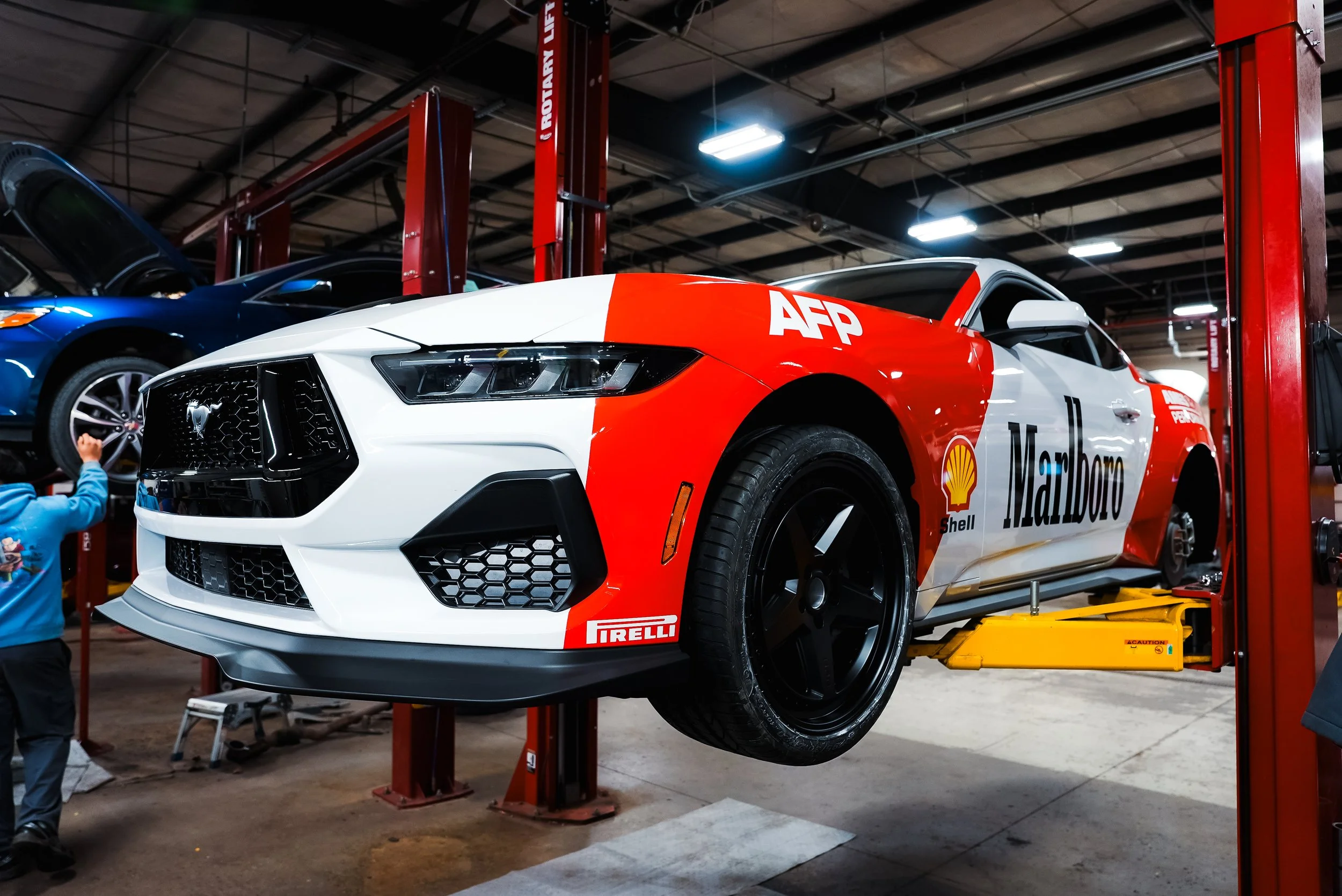
Tire Balancing & Performance Alignment
WHAT IT DOES
Tire balancing and wheel alignment address two different but closely related aspects of how a performance vehicle interacts with the road.
Balancing corrects small differences in weight throughout the wheel and tire assembly so it can rotate smoothly at speed. Even a minor imbalance creates centrifugal force as rotational speed increases, which can translate into steering wheel vibration, reduced ride quality, accelerated tire wear, and unnecessary load on suspension components.
Performance alignment focuses on the relationship between the tires, suspension, and road surface. Camber, caster, and toe determine how the tire is positioned both while traveling straight and as the suspension moves through braking, acceleration, and cornering.
On a modified vehicle, factory alignment targets may no longer represent the ideal setup. Lowering springs, coilovers, altered ride height, wider wheels, different tire compounds, and track use can all change suspension geometry and how the tire uses its available contact patch.
The goal is to create a wheel and tire package that rotates smoothly and suspension geometry that supports the way the vehicle is actually driven.
A performance tire can only generate the grip its contact patch allows. Horsepower, upgraded brakes, sophisticated suspension components, and expensive tires cannot perform at their best if the wheel is vibrating at speed or the tire is meeting the pavement at the wrong angle.
High-Speed Stability: Small balance problems become increasingly noticeable as wheel speed rises. Proper balancing minimizes vibration and helps the chassis remain composed at highway and performance-driving speeds.
Maximum Tire Contact: Alignment determines how effectively the tread remains in contact with the pavement. Proper geometry helps the tire generate predictable grip during acceleration, braking, and cornering.
Camber Control: Negative camber can help maintain tire contact during hard cornering as the chassis loads the outside suspension. Too much, however, can reduce straight-line contact and accelerate inner-edge wear.
Toe Precision: Small changes in toe can significantly influence turn-in response, straight-line stability, tire temperature, and wear. On a performance setup, a seemingly minor adjustment can noticeably change how the vehicle behaves.
Caster And Steering Feel: Caster influences steering effort, straight-line stability, steering return, and dynamic camber as the wheels turn. Where adjustment is available, it can be an important part of dialing in front-end behavior.
Tire Temperature Management: Alignment affects how load and temperature develop across the tread. On vehicles used for competition, tire wear and temperature patterns can provide valuable information about whether the setup is actually working.
Protecting Performance Tires: High-performance tires can be expensive, and aggressive alignment or incorrect geometry can consume them surprisingly quickly. A properly chosen setup balances performance requirements with acceptable tire life.
Supporting Suspension Modifications: Changing ride height changes suspension geometry. A vehicle with lowering springs or coilovers should be aligned around its new configuration rather than assuming the original settings remain appropriate.
Why It Matters:
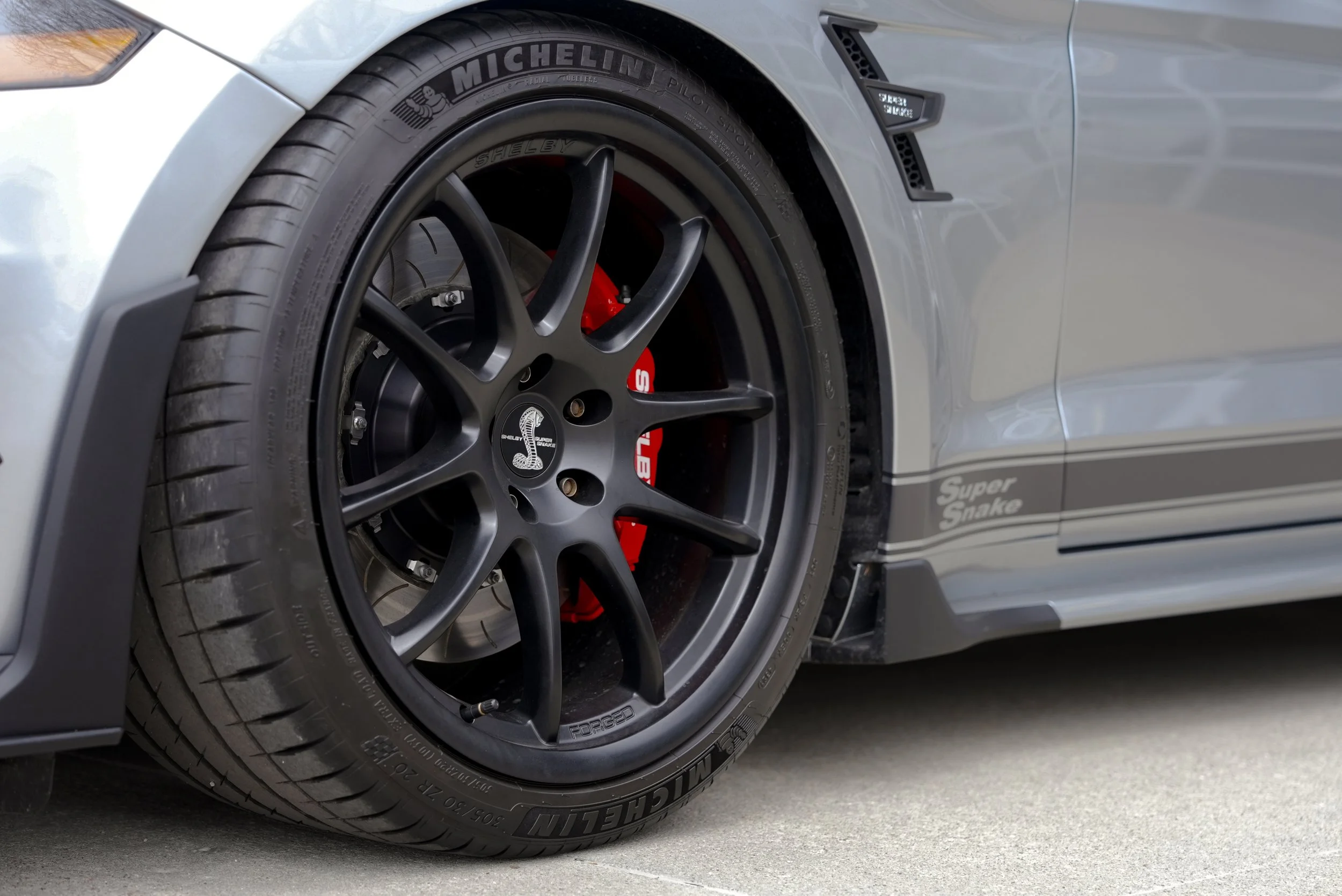
An alignment machine can produce numbers that fall within a manufacturer's acceptable range, but that doesn't automatically mean those numbers are ideal for a modified or performance-driven vehicle.
Aligning To Factory Specifications Without Context: OEM specifications are generally designed around factory suspension, factory tires, predictable wear, comfort, and everyday driving. A modified vehicle may benefit from different targets.
Chasing Maximum Negative Camber: More negative camber isn't automatically more performance. The correct amount depends on suspension design, tire, vehicle weight, driving style, and intended use.
Ignoring Ride Height Changes: Lowering or substantially altering suspension height can change camber, toe, control-arm position, and other aspects of suspension geometry. Some builds require additional adjustable components to achieve the desired alignment.
Balancing Around A Damaged Wheel Or Tire: Adding weights cannot correct every problem. Bent wheels, tire runout, irregular wear, or internal tire defects should be identified rather than disguised with additional balance weight.
Tire Pressure Differences: Alignment and handling evaluations should begin with appropriate and consistent tire pressures. Pressure changes the tire's shape, contact patch, temperature behavior, and response.
Worn Suspension Components: Alignment cannot compensate for worn bushings, ball joints, tie rods, wheel bearings, or other components that allow geometry to change while the vehicle is moving.
One Alignment For Every Application: A comfortable street setup, drag-oriented Mustang, road-course car, lowered show build, and performance truck do not necessarily benefit from identical alignment targets.
What to watch out for:
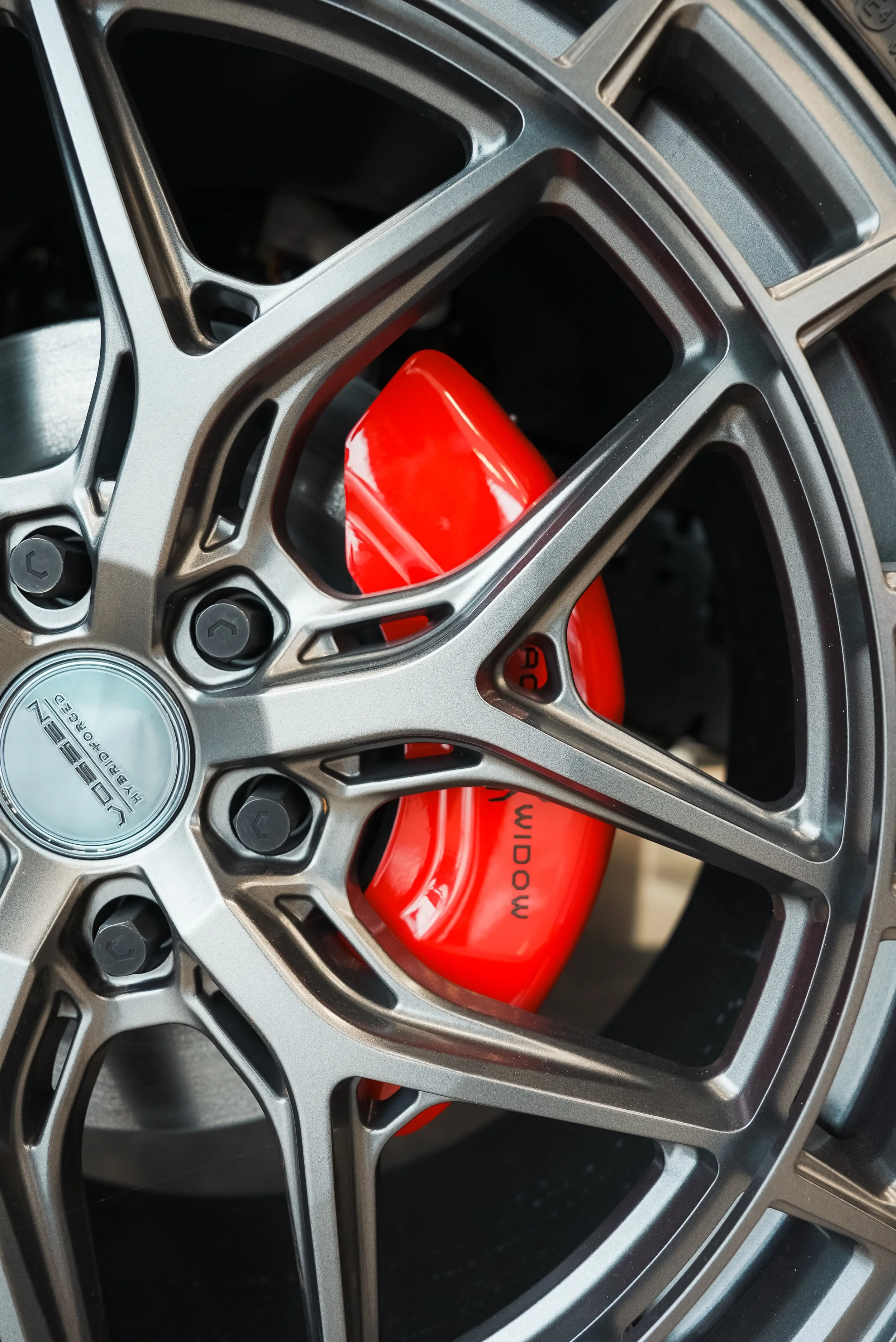
the afp approach:
At Ames Ford Performance, performance alignment is about more than getting every measurement to display green on an alignment machine.
We consider the vehicle, suspension modifications, ride height, wheel and tire package, tire compound, intended use, and the driver's priorities before determining what the alignment should accomplish.
A street-driven Mustang needs predictable handling and reasonable tire life. A road-course Mustang may need geometry designed around cornering loads and tire temperatures. A lowered performance truck presents different geometry and tire requirements altogether.
Balancing receives the same attention. If a wheel and tire assembly requires unusual correction or continues to exhibit vibration, the objective is to understand why rather than simply continue adding weight.
Performance alignment is ultimately about making the chassis work as a system. When the tire is properly balanced, correctly positioned, and using its contact patch effectively, every suspension, brake, and horsepower upgrade has a better opportunity to do its job.
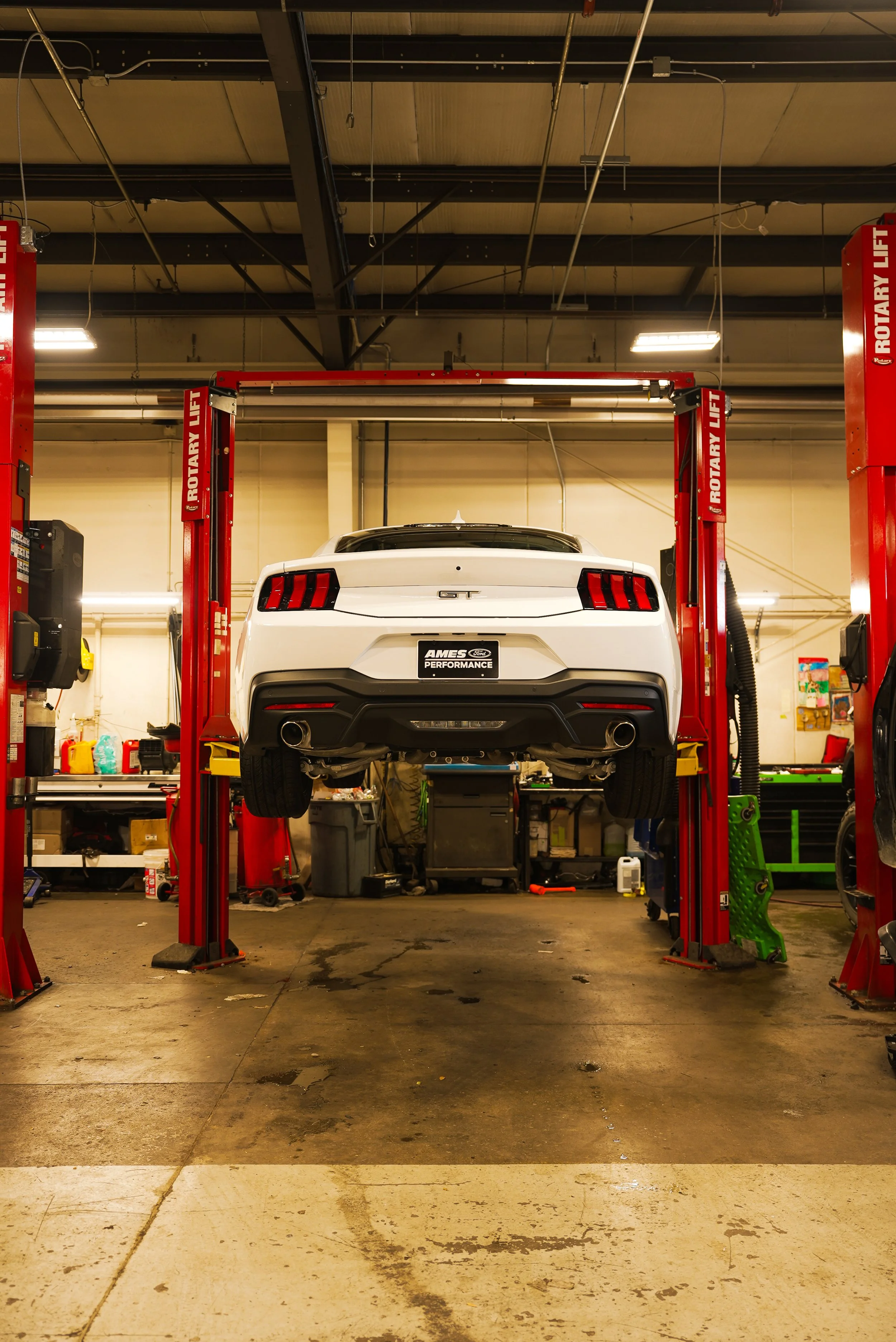
Your Next Move
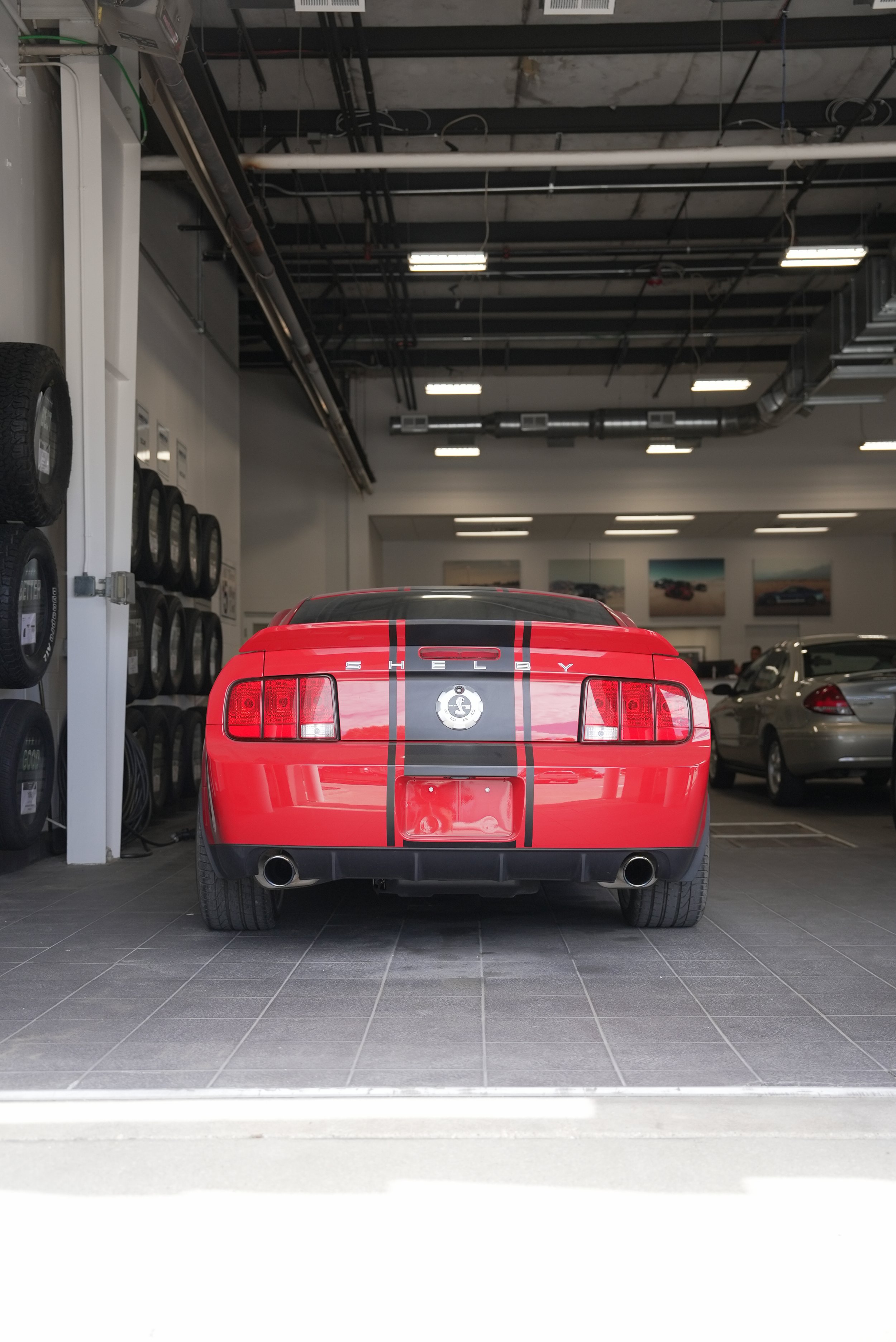
We custom-fit premium body kits and individual aero components that match your build’s goals. You will work directly with our performance team to identify the most logical (or most wild) additions so you can achieve the mecca of custom looks for your vehicle. You eat with your eyes first, so if you have a strong appetite, we can put that belly at ease.